Documents Required for SMSF Audit in Australia
The preparation of the required documentation for SMSF audit ensures that trustees and accountants conduct the audit process smoothly on an annual basis. The lack of documentation causes a delay in the audit process and makes verification challenging.
Wise SMSF Audits offers a professional audit service throughout Australia and works with accountants, SMSF administrators and trustees by offering the service of online document submission and fixed fee auditing.
Why Is It Necessary To Have SMSF Audit Documents?
Each and every SMSF requires an annual independent audit conducted by an appropriate SMSF auditor registered in Australia. The audit involves reviewing the financial records of the SMSF and ensuring that the SMSF complies with all applicable laws governing superannuation in Australia.
It will be important for you to prepare all your audit documents in order to make it easier for your SMSF auditor to conduct his or her job without any difficulties.
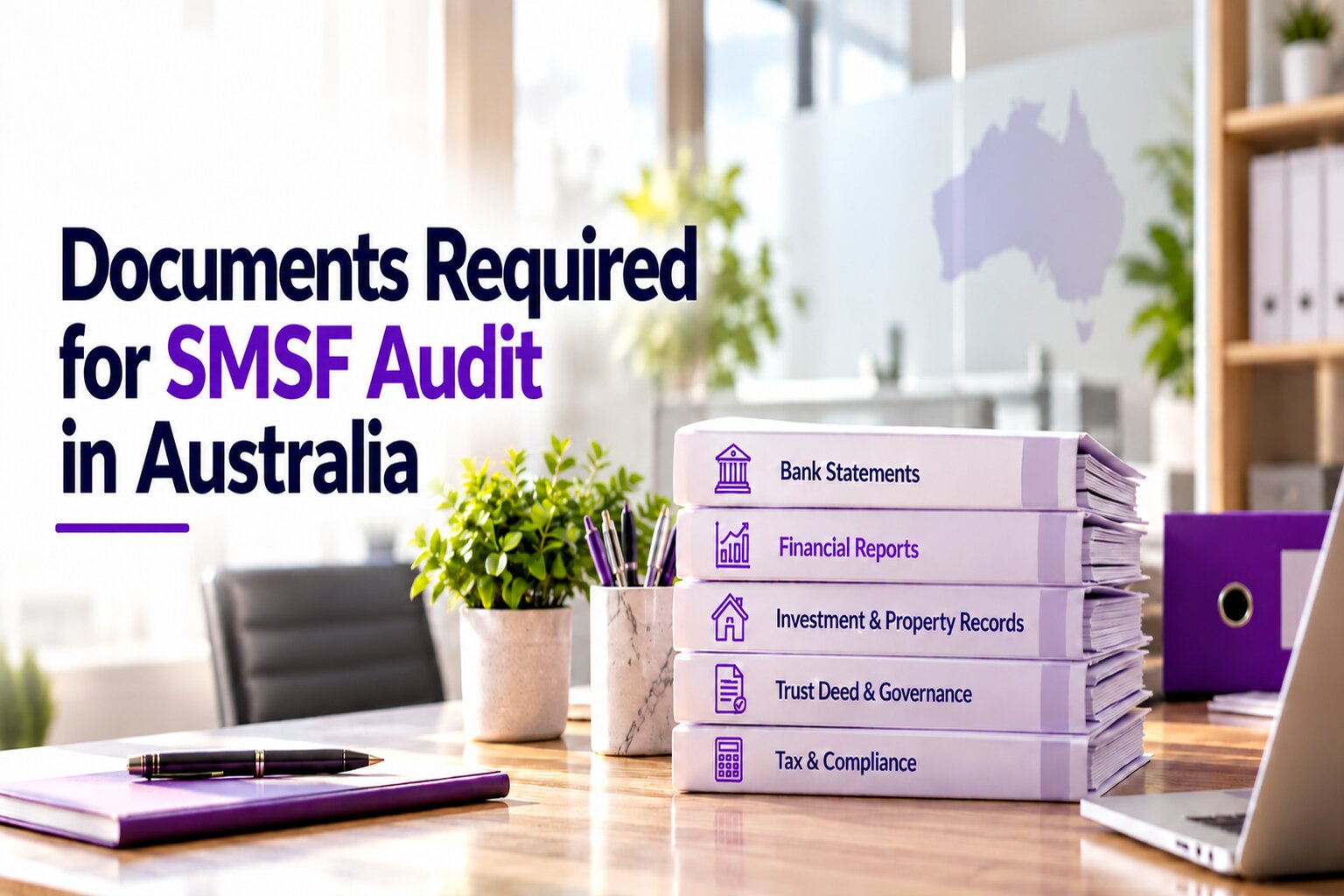
Documents Needed for an SMSF Audit
The documents required for SMSF audit depend on the types of investments and transactions of the fund, among other factors. The following is a list of the important documents that need to be prepared.
1. Financial Statements and Accounting Records
Prepare the fund’s SMSF financial statements and supporting accounting records, which include:
- The statement of financial position.
- The operating statement/income statement.
- The general ledger/trial balance.
- The reports on income and expenses.
- The bank reconciliation statement.
- The supporting schedules of assets and liabilities.
These details will assist the auditor to assess the financial status of the fund and support the transactions entered.
2. Bank Statements and Transactions
The bank statements are essential in proving the income and expenditure, contributions, and benefits paid by the fund.
These records include:
- Bank statements for all the bank accounts of SMSF.
- Bank reconciliation statement.
- Deposit and withdrawal transactions.
- Records backing any material transactions.
- Contribution and pensions paid records.
The auditor may require more documents to prove ownership, valuation, incomes, and the fulfillment of investment policies of the SMSF.
3. Investment Documents
SMSF investments must have appropriate documents to prove them. These documents will be the following depending on the type of investments made by the SMSF:
- Shareholding and managed fund related documents.
- Purchase and sale of investments documents.
- Property contract and settlement documents.
- Evidence for valuations of properties or valuation of other assets.
- Income and expenses related to property documents.
- Loan documents and investment documents.
- Cryptocurrency transaction documents.
Further documentation could be required from the auditor to verify ownership, valuation, income, and SMSF investment compliance.
4. Trustee and Funds Governance Documentation
Governance documentation is documentation that gives an insight on how the fund was formed and run
It might consist of the following documents:
- SMSF trust deed and amendments to it.
- Details of the trustee/director(s).
- Minutes of the meetings of the trustees.
- An investment policy and evidence that it is reviewed regularly.
- Declarations of the trustees and documents regarding their appointment.
- Any changes of members or trustees.
Organising such documents assists the auditor to evaluate the management and decision making of the fund.
5. Contributions, Pensions, and Benefits of Members
Contributions and benefit payments information is very useful in the analysis of transactions of the members and their superannuation obligations.
The following documents should be prepared:
- Reports for employer and personal contributions.
- Contributions allocation information.
- Statement and transaction report for members.
- Pension commencement information.
- Pension payments information.
- Lump sum withdrawal information.
- Rollover information.
Other documentation may be needed based on the contributions and pension plans of the trust fund.
6. Tax and Compliance Documents
The auditor would also require the following documents in relation to the tax status and compliance needs of the fund, such as:
- Annual financial statements from last year (audited).
- Last audit report and any management letter that exists.
- SMSF Annual Return with related tax documents.
- PAYG withholding documents.
- Documents for related party transactions.
- Documents for the loan and adherence to borrowing rules.
- Documentation for identified compliance issues.
The provision of such documentation will assist the auditor to be able to check the outstanding issues in relation to the fund.
SMSF Audit Checklist: Steps to Gather Relevant Documentation
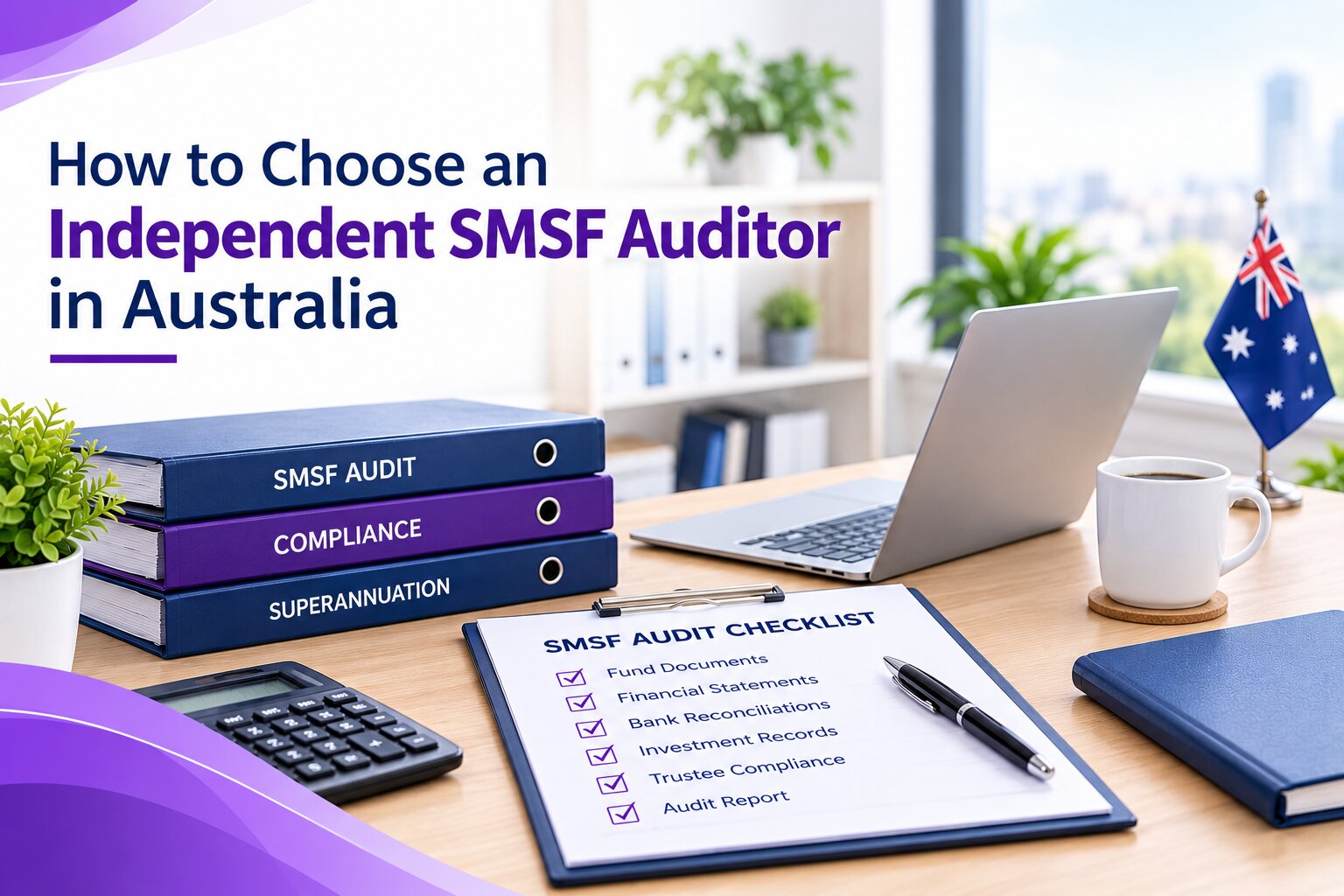
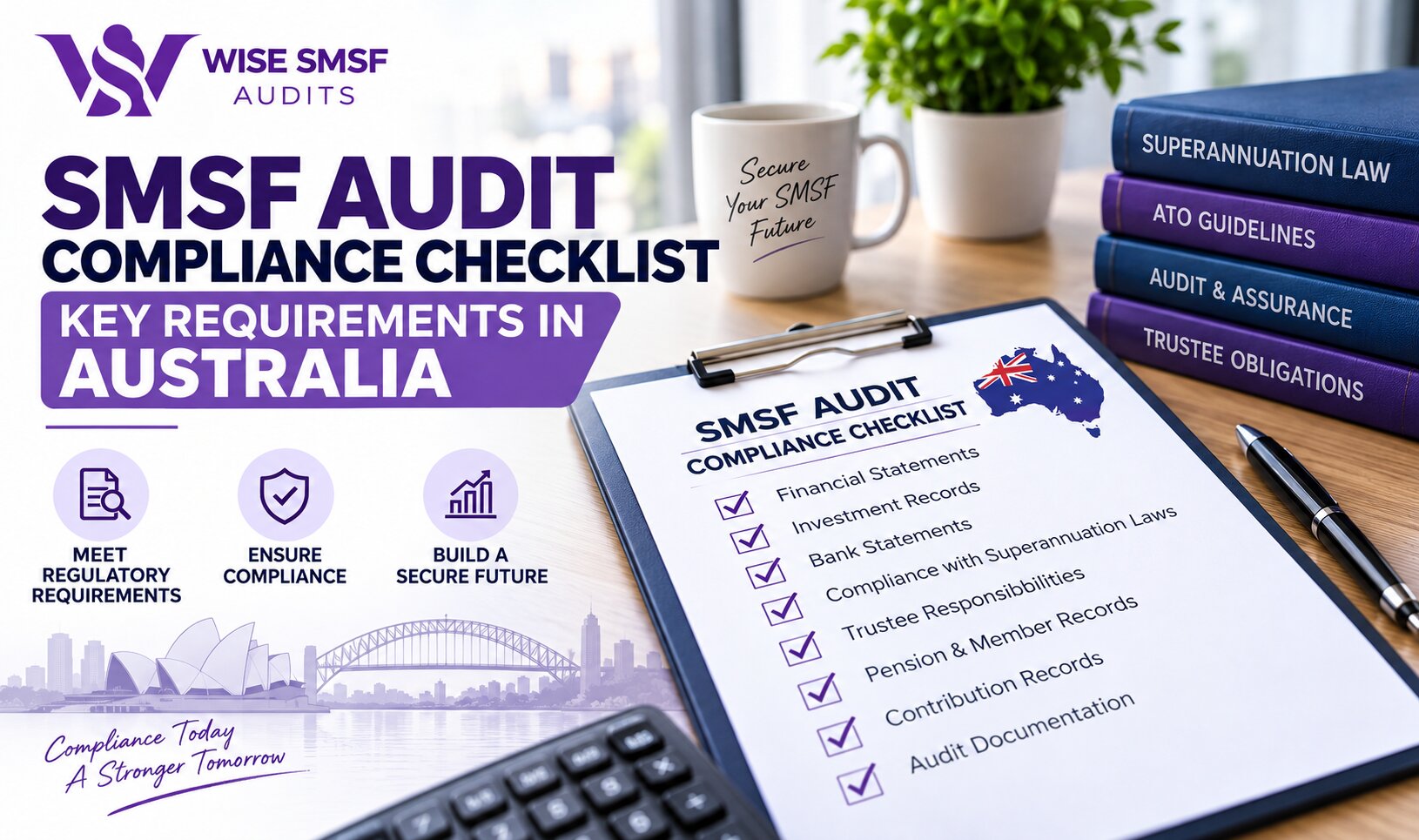
An SMSF audit checklist is one way to ensure that the necessary documents are not missed before auditing an SMSF.
Steps to be followed are:
- Finance documentation: Get together bank statements, accounting documentation, and supporting documentation for any transactions.
- Account reconciliation: Ensure that the balance of the account is accurate from documentary evidence.
- Investment documents: Collect ownership, transactional, and valuation papers regarding investments.
- Governance documents: Determine if the documents related to the trust deed, investment policy, and trustee decisions are available.
- Documentation gaps: Locate the missing documents and determine the transactions without documentation.
- Submit the documents: Submit the documents using the method agreed upon by your auditor.
These steps will assist accountants in dealing with multiple accounts and unnecessary documentation requirements.
SMSF Audit Requirements in Australia – Understanding It All
SMSF audit requirements Australia are not only about preparing the financial statements. The trustees have to keep their records properly, observe the relevant superannuation law and prove their position to the auditor through the evidence available.
The most frequent issues in this regard may be the lack of bank statements, no justification of asset values, incomplete minutes of meetings of trustees and inconsistency of accounting records with the supporting papers.
However, reviewing documentation prior to the audit will help to find deficiencies in advance. Nonetheless, the auditor will have to independently analyze the evidence and reach conclusions.
Ease Your Audit Process with Wise SMSF Audits
Documentation for several funds may cause extra work for the accounting firm. Wise SMSF Audits offers professional SMSF audit services Australia, and we help accountants, SMSF administrators, and trustees with their annual audits.
We offer our clients:
- Expert SMSF audit services that are ASIC-registered.
- Option to submit documents online and via paperless methods.
- Fixed fee for audits.
- Professional communication during audit.
- Service for accounting firms with multiple SMSF clients.
Using online services will ease your audit process as well as your response to audit queries.
FAQs
1. What documents should be provided during SMSF audit?
Financial reports, bank reports, investment reports, trustee reports, contribution reports are among them.
2. Is an audit of an SMSF required in Australia?
Yes, annual audits of an SMSF are required by law.
3. How would the use of an SMSF audit checklist help?
It will help in sorting out all the documentation that is needed before getting to the process of auditing.
4. What is the impact of lack of documents required for SMSF audit?
Lack of documentation may result in delays in the process and may need additional documentation/evidence.
5. Does Wise SMSF Audits help with SMSF audits?
Yes, Wise SMSF Audits conducts online, fixed fee SMSF audits all over Australia.