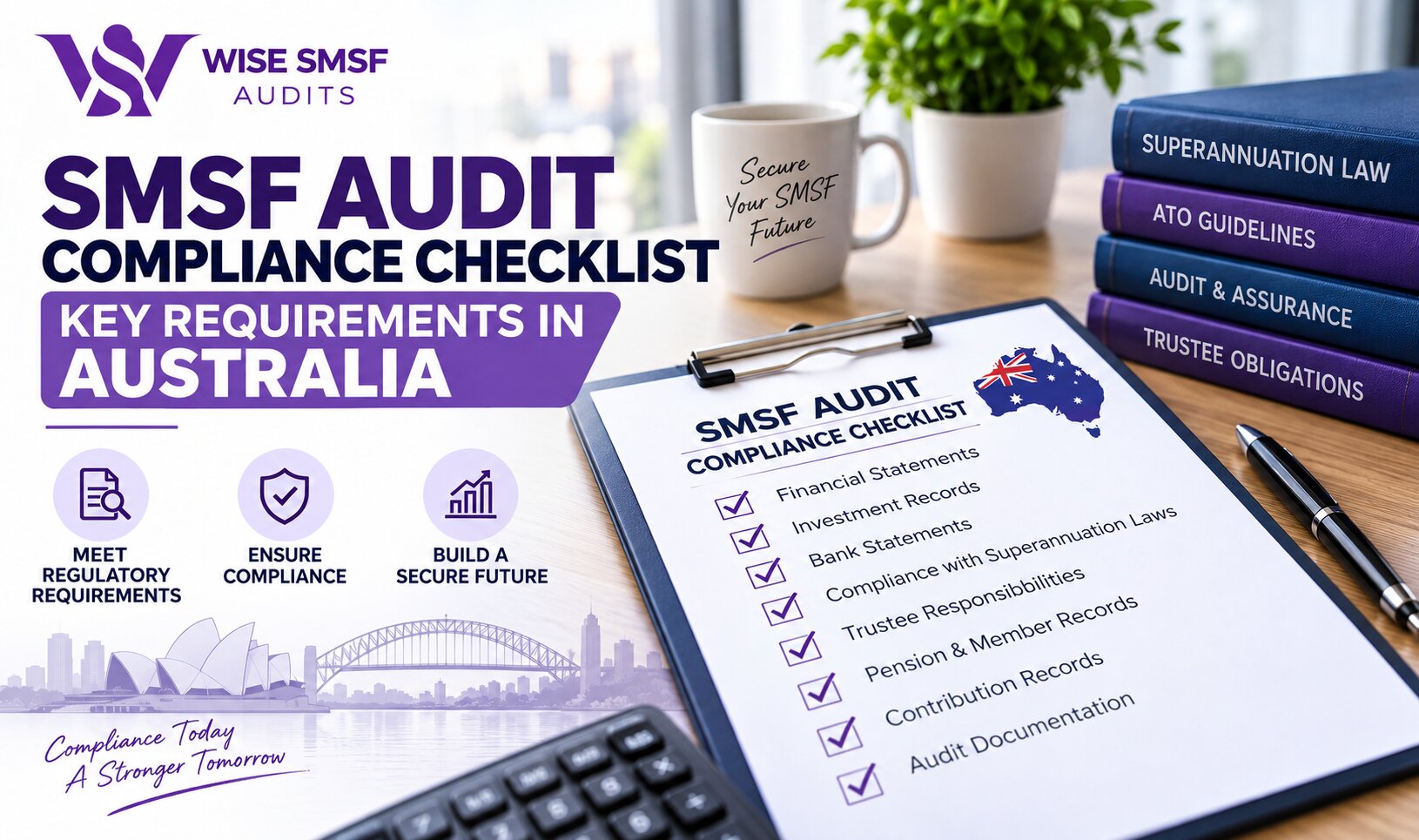
SMSF Audit Compliance Checklist: Key Requirements in Australia
There are a number of legal, financial, and administrative requirements that must be complied with in order to run an SMSF effectively. The annual audit is one such requirement, and it will make the process easier to comply with if there is an SMSF audit compliance checklist available to assist the trustees with organization.
If the documentation is ready prior to the SMSF audit, then this can make the entire process simpler for the auditor. It will also be helpful for the trustees to know exactly what kind of documentation is required.
SMSF Audit Compliance Checklist Definition
An SMSF audit compliance checklist refers to a practical tool designed to examine the accounts and areas that may be considered during an SMSF audit.
This may help SMSF trustees evaluate
- Financial statements and accountancy records
- Bank and investment activity
- Contribution and rollover amounts
- Pension payments
- Investments held and asset holdings
- Related-party transactions
- The document relating to the investment strategy
- Members and trustee details
- Documents that relate to significant transactions
The checklist is not intended to replace the independent audit; rather, it will assist the trustee and his or her advisers in preparing the documentation needed for the audit.
Key Requirements for an SMSF Audit
1. Accurate Financial Record Keeping
Accurate record keeping of financial matters is essential to prove the financial position of the fund and also facilitate the dealings of the fund.
The trustees should have all the necessary documents, including bank statements, income, expenses, investment, contribution documents etc., for the financial year.
2. Review of Contributions and Rollovers
Contributions and rollovers must all be recorded adequately and documented properly.
Prior to an audit, verify whether contributions have been assigned accurately to the members and whether the rollovers are adequately documented.
3. Review SMSF Investments
The SMSF investments need to be checked to determine whether they have been invested in accordance with the needs of the fund.
The trustees are supposed to keep records of the ownership of the investment, as well as the transactions of buying and selling the investments, income earned from the investment, and the valuation of the investments.
4. Review Related-Party Transactions
Related party transactions should be considered very carefully.
The trustees must keep records of the transactions in question, ensuring that they meet any superannuation requirements.
5. Review Pensions Payments
If the SMSF is paying out any pensions, the trustee needs to examine the pension record and payment information before conducting the audit.
Documents that could be considered are the calculation of pensions, payment details and member account balances.
6. Verification of Assets in the Fund
The trustees should prove that the SMSF’s assets are owned by the fund.
The types of documentation needed would depend on the nature of the assets. They include but not limited to the following:
SMSF Audit – Documentation Required
It is essential that, prior to the SMSF audit, all necessary documentation must be prepared and collected by the trustees as well as their advisors, including:
- Bank statements and reconciliations
- Financial statements
- Investment statements
- Documentation of contributions and rollovers
- Pension payment documentation
- Documentation of property and assets
- Loan agreements
- Lease agreements
- Investment strategy documentation
- Trustee and member documentation
- Invoices and receipts
- Documentation in support of material transactions
The specific documents required will vary depending on the operations, investments, and transactions carried out during the year.
Common Issues with SMSF Compliance
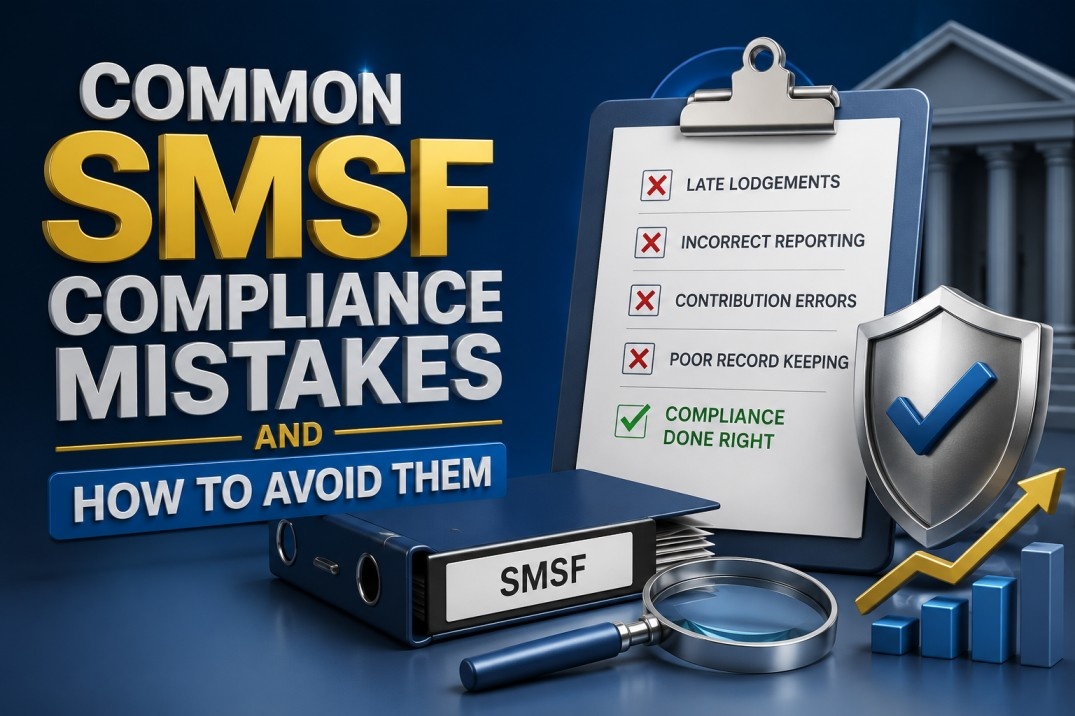
Problems arising out of incomplete documentation or incorrectly recorded transactions may arise during an SMSF audit. Some common items that need to be reviewed include lack of proper documentation for investments, inaccurate asset ownership, erroneous contributions, related party dealings and insufficient documentation.
It is advisable not to wait until an audit to check these items. Record keeping and accounting will assist in identifying any problem at an early stage.
Audit Preparation Steps for Your SMSF
A process-driven approach will make audit preparation much easier. Prior to sending your documents for audit
- Collect all the relevant documentation.
- Conduct bank reconciliation of your SMSF.
- Analyze contributions, rollovers, and pension payments.
- Review ownership of investments and documentation.
- Consider related party dealings.
- Ensure that the investment strategy is up-to-date.
- Verify that all significant transactions have sufficient supporting documents.
- Provide additional information in case of requests by the auditor.
Good preparation will minimize the need for follow-ups and will ensure efficient audit processing.
Why Select Professional SMSF Audit Services?
SMSF auditing is both a financial and a compliance task. As such, documenting properly becomes vital. The services of an accredited SMSF auditor will assist in getting an independent evaluation of your SMSF's records and compliance status.
The professional SMSF audit services provided by Wise SMSF Audits in all Australian states and territories will serve you as a trustee, accountant, SMSF administrator or other financial professionals. Their online SMSF audit will make document submission secure and efficient.
No matter whether you conduct an annual audit or assess your SMSF's record during the year, an SMSF audit compliance checklist can be of assistance to you.
FAQ
1. What does an SMSF audit compliance checklist include
It will generally include the following items: financial records, investments, contributions, pensions, assets, transactions, and compliance documentation.
2. When is it mandatory for the SMSF to be audited?
It is mandatory for the SMSF to be audited annually once per financial year.
3. What is necessary for the audit of the SMSF?
The most common examples of documents include bank statements, financial statements, documents related to investments, contribution documentation.
4. What must trustees do to prepare for an SMSF audit?
Trustees need to keep their paperwork accurate and up to date before the audit.
5. What would occur should a problem arise in terms of compliance for the SMSF?
The auditors will evaluate the problem and the reporting that needs to take place.
SMSF Audit Checklists for Trustees
In preparing for your SMSF’s annual audit, ensure that you check the following items:
- Financial and accounting records
- Bank statements and reconciliation
- Contribution and rollover information
- Pensions
- Investments
- Ownership of assets
- Related-party transactions
- Investment approach
- Trustee and member information
- Documents supporting any substantial transactions
Being well organized throughout the year will make the annual audit process much easier and help trustees stay on top of SMSF compliance.
Should you be looking for expert and efficient SMSF audit assistance in Australia, Wise SMSF Audits is here to help trustees and accountants with an online audit process.