SMSF Record Keeping Requirements: A Complete Checklist
If you're a trustee of a self-managed super fund, you've probably asked yourself this at some point: "Do I really need to keep every single document forever?" The good news is no — but the answer isn't a simple one-size-fits-all number either.
Understanding SMSF record keeping requirements isn't just about ticking a compliance box. It's what proves your fund's transactions actually happened the way you say they did, backs up your financial reporting, and shows that decisions trustees made along the way were properly thought through — not just agreed to over a coffee and forgotten. And when audit time rolls around, well-organised records are what make your auditor's job (and yours) a whole lot easier.
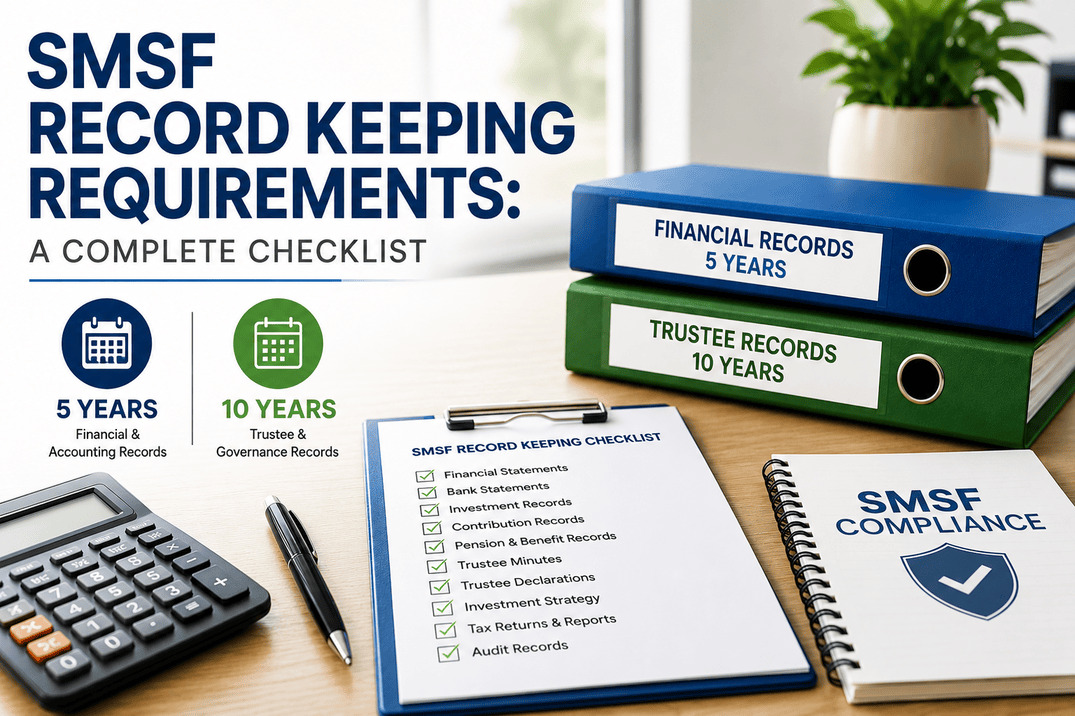
So, how long should you keep SMSF records? It really comes down to what type of record you're looking at. Under the ATO's current guidance, most financial and accounting paperwork needs to stick around for at least five years, while anything related to trustee decisions and governance needs to be kept for a full ten years. Once you know which bucket a document falls into, staying audit-ready becomes a lot less stressful.
SMSF Records: Is It 5 Years or 10 Years?
Not all documents are created equal in the eyes of the ATO. Here's a quick breakdown of what falls where:
|
Record |
Minimum Retention Period |
|
Accounting records |
5 years |
|
Annual financial statements |
5 years |
|
SMSF annual returns |
5 years |
|
Transfer balance account reports |
5 years |
|
Certain benefit payment records |
5 years |
|
Trustee meeting minutes |
10 years |
|
Records of trustee decisions |
10 years |
|
Records of trustee changes |
10 years |
|
Trustee declarations |
10 years |
|
Certain member reports |
10 years |
Keep in mind these are minimums. Depending on the transaction or the tax matter involved, it's often smart to hang onto records a little longer than required.
Breaking It Down: What Goes Where
Financial and accounting records — generally 5 years
This bucket covers the everyday paperwork that explains your fund's transactions and financial position: financial statements, operating statements, statements of financial position, annual returns, and related reporting documents.
It's also worth holding onto the supporting evidence behind these — things like bank records, investment statements, invoices, and contracts — since they help explain what a transaction was actually for.
Trustee and governance records — generally 10 years
These get a longer shelf life because they show how the fund was actually run. Think trustee meeting minutes, records of major decisions, trustee changes, relevant declarations, and certain member records.
Here's a good rule of thumb: if trustees make a significant call about an investment, a pension, or any other important fund matter, write it down. Don't rely on memory or an informal chat — document it properly.
What Should an SMSF Trustee Actually Be Keeping?
Think of good SMSF trustee record keeping as building a clear paper trail — from the moment a transaction happens all the way through to the financial statements and annual return.
Banking and accounting
- Bank statements
- General ledger and accounting records
- Income and expense records
- Financial statements
- Annual returns
- Supporting tax documentation
Investments
- Share and managed fund contract notes
- Dividend and distribution statements
- Investment platform statements
- Property purchase and sale documents
- Lease and rental records
- Valuation evidence
- Relevant loan documentation
Contributions and rollovers
Hang onto supporting records for member and employer contributions, rollovers, reconciliations, and other significant member transactions.
Pensions and benefits
If your fund pays pensions or other benefits, keep documentation covering pension commencement, calculations, payments, commutations, and any related reporting.
Trustee and governance
This should include minutes, key decisions, declarations, appointment paperwork, trustee changes, member reports, and evidence that the investment strategy has actually been reviewed.
What Do You Need for an SMSF Audit?
The exact list of documents required for an SMSF audit depends on what your fund is doing. A fund that only holds listed shares will need different evidence than one that owns property or is paying pensions in retirement phase.
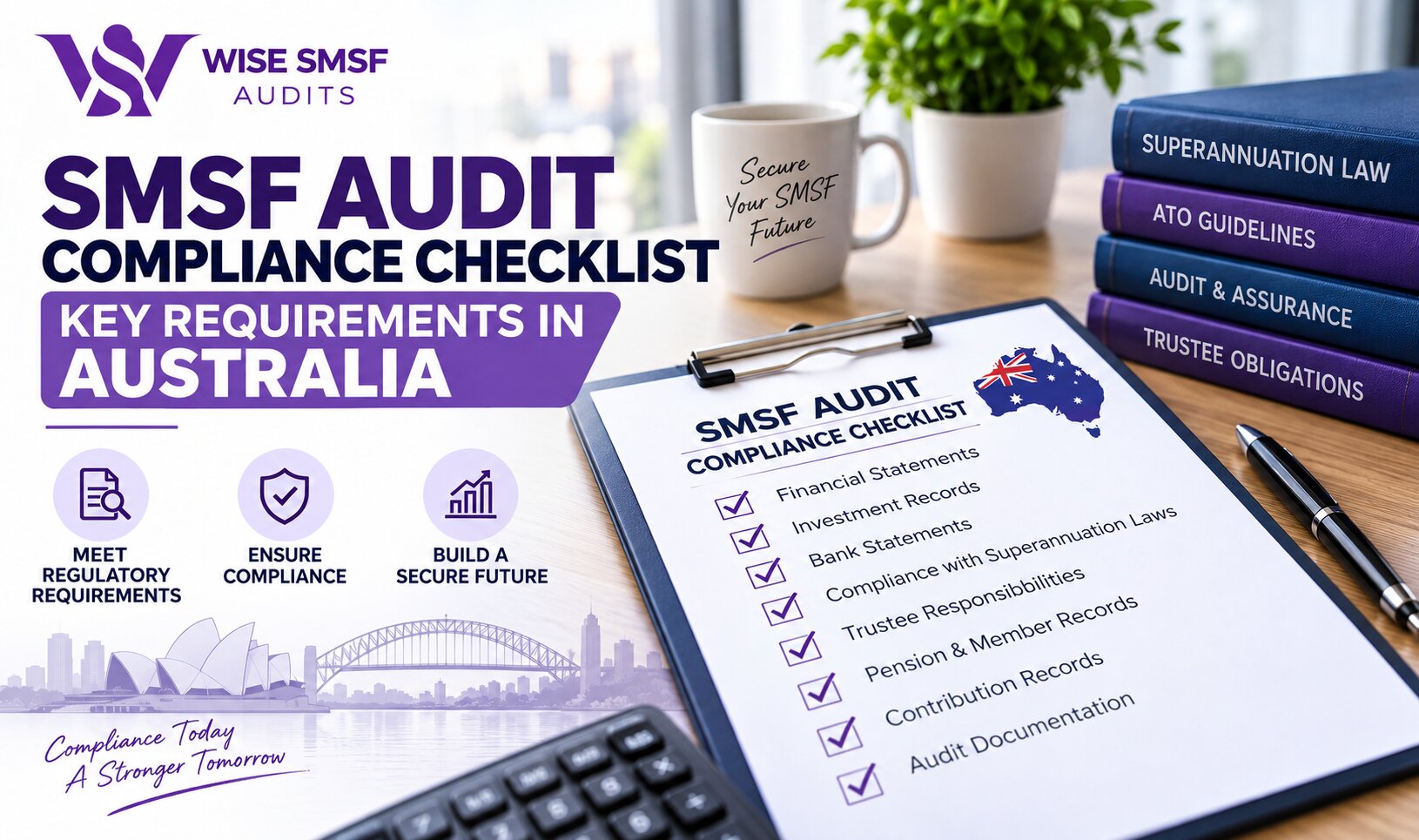
Generally, an auditor will want to see:
- Bank statements and reconciliations
- Investment statements and transaction records
- Financial statements
- Contribution and rollover evidence
- Pension and benefit payment records
- Asset valuation evidence
- The investment strategy
- Trustee minutes and resolutions
- The trust deed and any amendments
- Property documentation, where relevant
- Related-party transaction documentation, where relevant
Here's the thing people sometimes miss: an auditor isn't just checking that a transaction shows up in the accounts somewhere. They need enough evidence to actually understand and verify what happened.
Say a bank statement shows $100,000 leaving the fund. On its own, that number doesn't tell the auditor much. The contract or investment statement behind it is what explains what the money was for, when it happened, and how it should be recorded.
Quick Checklist Before You Submit for Audit
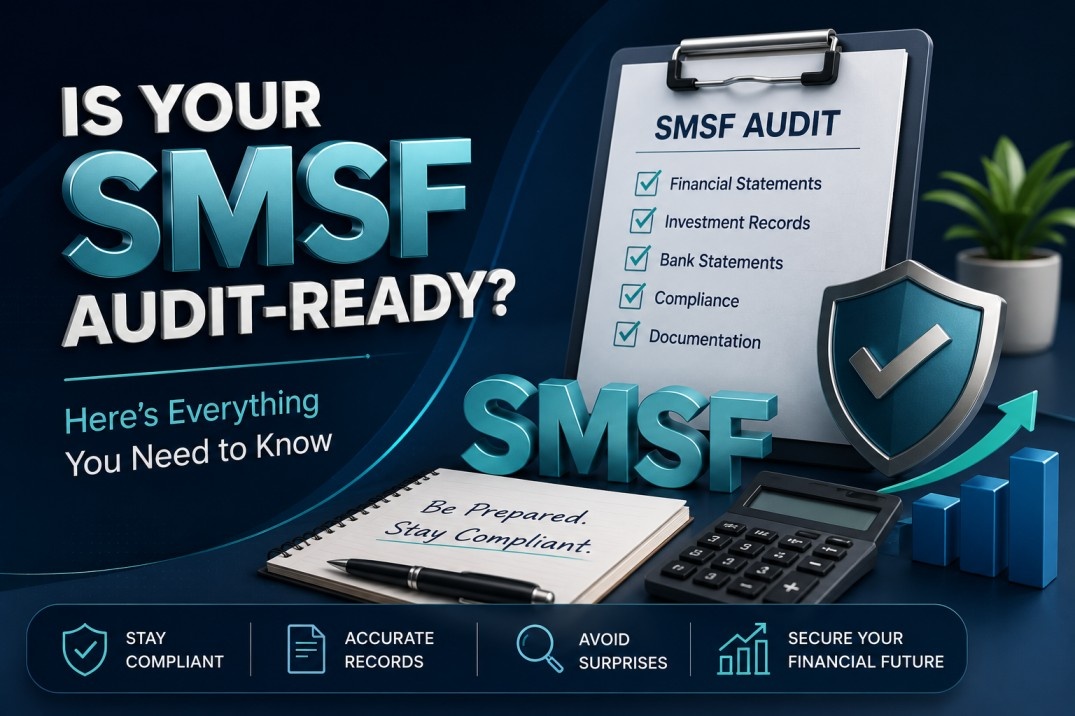
Before you hand everything over, run through this:
- Bank statements are complete
- Investment transactions are supported by documentation
- Contributions and rollovers are reconciled
- Pension and benefit payments are documented
- Asset valuations have supporting evidence
- The investment strategy has been reviewed
- Trustee minutes and key decisions are on file
- Trustee declarations are available where applicable
- The trust deed and amendments are on hand
- Property records are complete, where applicable
- Related-party transactions are properly documented
- Any issues from the previous audit have been resolved
Getting through this list before audit season starts can save you a lot of back-and-forth with your auditor later.
Common Record Keeping Mistakes (and How to Avoid Them)
Here's something worth remembering: messy records don't necessarily mean something went wrong with the transaction itself. More often than not, the real issue is simply that there isn't enough evidence to show what actually happened.
The usual culprits? Keeping a bank statement with no supporting documents behind it, forgetting to write down an important trustee decision, misplacing investment records, missing valuation evidence, or — the classic one — scrambling to find everything right before the audit is due.
The fix is pretty simple, even if it takes discipline: keep on top of your records throughout the year instead of trying to piece everything back together at the last minute.
Can SMSF Records Be Kept Electronically?
Yes, absolutely. SMSF records can generally be stored electronically, as long as they meet the relevant requirements and stay accessible and readable whenever they're needed.
Having a consistent filing system makes a real difference here. Something as simple as this structure can save you hours down the track:
Banking → Investments → Contributions → Pensions → Trustee Minutes → Investment Strategy → Tax → Audit
Clear, consistent file names and reliable backups go a long way toward avoiding delays when documents are requested.
FAQs
1. How long do SMSF records need to be kept?
It depends on the record type. Most accounting and financial records need to be kept for at least five years, while trustee, governance, and certain member records generally need ten years.
2. What SMSF records need to be kept for 10 years?
This includes trustee meeting minutes, records of trustee decisions, trustee changes, applicable trustee declarations, and certain member reports.
3. What SMSF records need to be kept for 5 years?
Generally: accounting records, financial statements, SMSF annual returns, transfer balance account reports, and certain benefit payment documentation.
4. What documents are required for an SMSF audit?
Typically bank statements, investment records, financial statements, contribution and rollover evidence, pension documentation, asset valuations, trustee records, and the investment strategy — though the exact list depends on your fund's circumstances.
5. Does an SMSF auditor need bank statements?
Yes — bank statements are key audit evidence, though additional documentation is often needed to explain larger or unusual transactions.
Keep Your SMSF Audit-Ready with Wise SMSF Audits
Record keeping shouldn't be something you scramble to sort out once a year. When your documents are organised as you go, you'll have a much clearer picture of how your fund is actually performing — and audit time stops feeling like a fire drill.
If your SMSF audit is coming up, Wise SMSF Audits offers independent audit services designed to keep the process straightforward and professional.
Whatever your fund holds — investments, property, pensions, or anything else — having the right documentation ready makes all the difference. Ready for your SMSF audit? Get in touch with Wise SMSF Audits today